Adrenalin Sports - The Trend of Extreme Tourism

There are all types of tourism. Since extreme sports have become a new trend in the 1990s, there is a new option to take an Extreme vacation adventure. Here you will have a chance to try many different extreme sports in a short amount of time.

Being offered at a group rate gives the traveler a lower cost initiative and the privacy of doing it in a group instead of sticking out like a sore thumb. How do these vacation packages work, and what do they offer?

One such vacation is to go Sand boarding. Sand boarding parks exist in Brazil, Oregon and Peru, to name a few, so forget about having to find a suitable desert. The Middle East or South Africa have plenty of naturally sandy dunes to board down.

Scuba Dive the Titanic! If you loved the movie, did you ever fantasize checking out the wreckage for yourself? Well, you can. The Russian research ship will take you to the spot of the ship, and submersibles will allow you to drop down in this high pressure area.

Speaking of the movies, Thrill seekers Unlimited offers a Hollywood Stunt Man's Holiday. One week is provided. You pump iron and try your hands at stunt acting! It includes using the harnesses the real stuntmen use, and learning some getaway car style driving techniques.

Another big film of the 1970s, Jaws, may have fascinated you. Remember the scene when the shark attacks the man in the cage? Well, if believe it or not, Shark Cage Diving KZN is willing to make your dream come true. Now you can be the man in the cage! His teeth are all made of rubber - right? It starts out as a one hour dive, so you can observe the Great Whites in action. They are guaranteed to pass very close to your cage and give you the once over. If you really like it, you can go back down again for a longer period of time.

Space Tourism exists for the very rich, with a $200,000 ticket entry fee. Zero gravity flights are available to take you into space on a suborbital flight. This is available through Virgin Galactic and is expected to be launched during the first half of 2013.

Did you ever dream of going where no man has ever been before? Helicopter Skiing enables you to do this. The helicopter pilot delivers you to the mountain's highest heights! Imagine a 6,500 foot mountain peak skiing adventure in the areas above the moguls. Now imagine untouched, pristine white powder at the mountain's uppermost echelons. This excursion comes along with a guide and can be managed as an all-inclusive package or a pay-per-lift option. It is best for mountains in Italy and British Columbia.

If you still feel the ice attraction, go to an Igloo Village where you will actually sleep several days in an igloo! This all takes place on the Greenland peninsula, home of the indigenous Inuit people. Live near the polar bear, walrus, wolves, oxen and much more, courtesy of Abercrombie & Kent Extreme Adventures.

If you want to climb Kilimanjaro, then contact Kilimanjaro Climbing Company. They specialise in guided expeditions to Kilimanjaro and can give you information on the cost of climbing kilimanjaro, available routes, and more.

Television Peruana:  Aquí podrás encontrar todos los canales de la television peruana: Frecuencia Latina, CMD, America Televisión, Panamericana Televisión, Tv Perú, ATV, Global Tv, Gol Tv entre otros.

Travelling to Machu Picchu in Luxury: The Hiram Bingham Train

Travelling to Machu Picchu can be done in several ways; however, there is one option that will offer you the upmost luxury and comfort along the way. This is with the Hiram Bingham. The Hiram Bingham is a train service from Cusco to Machu Picchu, run by the Orient Express and is an asset to any luxury travel vacation to Peru.

The Hiram Bingham departs from the Poroy train station, just outside of Cusco at 9 am every day. If you are lucky enough to have a seat on this carriage, you will be subject to a range of top class services in the upmost comfort and extravagance. If you are looking to splurge on your Peru holiday, then this is one way that will certainly do the trick. From the moment you enter the station, you immediately receive special treatment. A glass of sparkling wine or fresh orange juice is served to you by the ever -so- keen attendees, as you wait on the platform with the other passengers for the train to approach. Once you board the train the magic continues, as does the delicacies. You are seated at a pristinely set dining table, in preparation for the 3 course brunch that will shortly follow, and served yet more sparkling wine or fresh juice. The brunch features gourmet Peruvian fares, prepared by the onboard professional chef. This is accompanied by Peruvian wines and followed by exquisite dessert and coffee. This really is a Peru travel trip in luxury.

The train itself consists of two dining cars, an observation bar car and a kitchen car. Both the exterior and interior are designed to aesthetically impress, and this they certainly achieve. The blue and gold external paint work conjures impressions of royalty and grandeur, which are continued, as you board the train itself. The carriages are furnished in a 1920's Pullman style making you feel as though you have stepped back in time. Polished wooden interiors with plush upholstery are intended to provide the upmost comfort for the 3 hour journey to Machu Picchu. The observation car at the rear of the train, with its large windows and skylights, give you the opportunity to really experience the lush greenery of the impressive Peruvian landscape, as you journey along. If this doesn't capture your attention, there is on board entertainment provided by the rail company. This includes traditional Peruvian dance and music.

When you reach Aguas Calientes, at 12:30pm, you are escorted up the ruins on the buses that frequent every 10-15 minutes. This is included in your train ticket, as is your entrance tickets and trained guides for Machu Picchu. After exploring the breathtaking wonder of Machu Picchu, you are taken for afternoon tea at the Machu Picchu Sanctuary Lodge, the restaurant and hotel located adjacent to the ruins. This 5 star hotel is also part of the Orient Express family. If you are taking the train back that same day, you will be escorted back on the bus and subject to yet more pampering. The ride back includes a gourmet four-course meal, again with drinks and entertainment. You should arrive back in to the Poroy station just past 9pm in the evening.

This luxury travel package is certainly one designed to pamper and indulge. But, of course, this all comes at a price. The rates for low season 2013 (Jan 01-Mar 31 and Nov 15-Dec 31) are $734 for a round trip or $438 one-way. High season (Apr 01-Nov 14 and Dec 21- Dec 31) sees a slight increase at $757 roundtrip or $452 one-way. This is certainly not the least expensive way to travel to Machu Picchu, but it is the most luxurious.

This article about discovering luxury travel to Machu Picchu during your Peru travel was written by a travel expert at Peru For Less who specializes in helping you organize best value Peru luxury travel packages and fully customizable itineraries.


Test flight over Peru ruins could revolutionize archaeological mapping

The Aurora Flight Sciences unmanned aerial vehicle will be integrated into a larger system that combines the flying device that can fit into a backpack with a software system that can discern an optimal flight pattern and transform the resulting data into three-dimensional maps. The project is an interdisciplinary collaboration between Vanderbilt archaeologist Steven Wernke and engineering professor Julie A. Adams. They call it SUAVe – for Semi-autonomous Unmanned Aerial Vehicle. It was partially financed by an Interdisciplinary Discovery Grant from Vanderbilt. "It can take two or three years to map one site in two dimensions," Wernke said. "The SUAVe (pronounced SWAH-vey) system should transform how we map large sites that take several seasons to document using traditional methods. It will provide much higher resolution imagery than even the best satellite imagery, and it will produce a detailed three-dimensional model." The SUAVe system is compact and is designed to be easy to use. "You will unpack it, specify the area that you need it to cover and then launch it," Wernke said. "When it completes capturing the images, it lands and the images are downloaded, matched into a large mosaic, and transformed into a map." The algorithms developed for the project allow the SUAVe system to specify the flight pattern to compensate for factors such as the wind speed, the angle of the sun and photographic details like image overlap and image resolution, Adams said. "The only way for this system to be cost-effective is for it to be easy enough to operate that you don't need an engineer on every site," Adams said. "It has to be useable without on-site technical help." Tests are scheduled from mid-July to mid-August at the abandoned colonial era town of Mawchu Llacta in Peru, and plans call to return next year after any issues that arise are addressed in the lab. Built in the 1570s at a former Inca settlement and mysteriously abandoned in the 19th century, the village of Mawchu is a 45-minute hike for the team from the nearby village of Tuti. Mawchu Llacta is composed of standing architecture arranged in regular blocks covering about 25 football fields square. "Archaeology is a spatial discipline," Wernke said. "We depend on accurate documentation of not just what artifacts were used in a given time period, but how they were used in their cultural context. In this sense, SUAVe can provide a fundamental toolset of wide significance in archaeological research." Wernke hopes that the new technology will allow many archaeological sites to be catalogued very quickly, since many are being wiped away by development and time. "The SUAVe system should be a way to create a digital archival registry of archaeological sites before it's too late," he said. "It will likely create the far more positive problem of having so much data that it will take some time go through it all properly." SUAVe could also have other applications, including the tracking of the progress of global warming and as a tool for first responders at disaster sites. "The device would be an excellent tool for evaluating the site of a major crisis such as Sept. 11 to decide how to deploy lifesaving resources more effectively," Adams said.

10 Travel Destinations In Peru Besides Cuzco And Lima

When planning a trip to Peru, many people focus on the two popular cities of Cuzco and Lima, unsure of what else to include on the itinerary. The reality is, adding some lesser-known yet worthwhile cities into the mix can really enhance a trip to this Andean country. Mancora You can easily waste weeks in this laid-back beach town without even noticing it. Mancora is a great place to visit if you enjoy surfing, beach sports, morning yoga on the shore or just doing nothing. The town is also an excellent home base if you're interested in visiting the fishing village of Cabo Blanco. This is where the famous author Ernest Hemingway used to hang out, drink Pisco Sours and pen classics like "The Old Man and the Sea." Pisco Visiting Pisco will allow you to visit one of the most beautiful and ecologically diverse places in the world, the Islas Ballestas. Commonly referred to as the poor man's Galapagos, these small islands feature seals, penguins, blue-footed boobies, guanay guano birds and other marine wildlife. Additionally, Pisco is close to Paracas National Reservation, a UNESCO World Heritage Site and the only marine reservation in Peru. Often considered one of the richest yet most bizarre ecosystems, you'll find animals like penguins, sea lions, marine cats, black ostrich, dolphins, purple crabs and chita fish. For a bit of history in Pisco, make sure to visit Tambo Colorado. It's an ancient adobe-style Inca fort that's been well preserved, with mazes and various rooms to explore. You'll also see the red, yellow and white painted walls from Inca times. Trujillo This city in northwestern Peru is full of history and culture. Visit the well-preserved ruins site of Chan Chan, which is considered the largest pre-Hispanic mud brick settlement in the Americas. Its origin dates back to the beginnings of the first millennium A.D. When in Trujillo, there is also an interesting archaeological complex called El Brujo. It dates back to the Moche culture from 100 B.C. to 650 A.D., and is thought to have been used for religious ceremonies. There is also an interesting museum about the site worth checking out. For more Moche history, travelers to Trujillo can also visit the Moche Pyramids, Huaca del Sol and Huaca de la Luna. Literally translating to "Pyramid of the Sun" and "Pyramid of the Moon," this is where it is believed priests carried out bloody human sacrifices. Puno While there isn't too much beauty in the actual city of Puno, you will find a lot of culture. Indigenous markets, authentic eateries serving three course meals for $1 and an array of unique transportation modes like go-karts and tuk-tuks abound. The main reason to go to Puno, however, is for the boat trips to the more beautiful areas of Lake Titicaca. Visit the man-made floating islands of Uros, made entirely out of reeds, while meeting the indigenous Uru people. You can also take a boat ride out to the traditional collectivist island of Taquile, known for its untouched beauty and locals who make handwoven textiles and clothing. These handicrafts are said to be of the highest quality in Peru. Moreover, the island has a unique method of tourism where cultural programming and homestays are the focus, which allows you to really get to know the people and their way of life. Huaraz Huaraz is a hiker's paradise, and if you love unusual landscapes, this is a city you must visit on a vacation to Peru. It's in the Cordillera Blanca region, an area of Peru's Northern Sierra. Trekkers can go to the "House of Guides" for complimentary trail information. If you're looking for a lengthy hike, go from Santa Cruz to Llanganuco. This four- to five-day excursion reaches 15,583 feet and allows you views of Huascaran, Peru's highest peak, beautiful valleys and crystal lakes. Along with hiking, visitors can enjoy mountaineering, rock climbing, biking, markets, archaeological sites, museums and parks. Chivay The main reason to visit the town of Chivay is to take in the natural beauty of "the world's deepest canyon," Colca Canyon. At 13,650 feet deep, it is more than twice as deep as the Grand Canyon. Hike the volcanic landscape, view ancient cave art and take in the unique scenery of the area. In Chivay, you'll also be able to enjoy natural hot springs, an astronomical observatory and cultural markets. Huanchaco If you love surfing, the beach town of Huanchaco is the perfect place to add to your Peru itinerary. Surfers of all levels can enjoy the good wind and swell direction, with swells ranging from 3 feet to 8 feet or more. It can also be interesting to learn about the ancient fishing tradition that is still practiced today. You'll notice numerous "cabalitos de torta," or "little reed horses." They get their name from the way they are straddled by fishermen when taking their nets into the water to catch fish. Interestingly, these boats are made of the same reeds used by the people of the Uros Islands to create their man-made floating islands. For a bit of culture, visit the town center of Huanchaco with colonial architecture, historic churches and peaceful squares. amazon jungle Iquitos Located in the Amazonas region of Peru, Iquitos offers opportunities to visit the largest tropical forest in the world, the Amazon Jungle. Adventurous travelers can take boat rides to view wildlife such as crocodiles, anacondas, monkeys, boas and more. There's also trekking, visiting indigenous communities and bird watching on the Amazon tours. Other experiences to have in Iquitos include visiting butterfly farms, monkey sanctuaries, manatee orphanages, animal rescue centers and national reserves. Nazca The main reason people visit Nazca is to see the famous Nazca Lines, the ancient geoglyphs in the Nazca Desert. This UNESCO World Heritage Site, which was believed to have been created by an ancient Nazca culture between 400 and 650 A.D., can be enjoyed on land or by viewing the site overhead from a helicopter. The Nazca Lines, however, aren't the only reason to visit this city. There's also hiking, sandboarding, a vibrant Sunday market, the Pardeones Ruins and Chauchilla Cemetery, which is full of mummified bodies. Arequipa The second most popular city in Peru, Arequipa lies in the Andes Mountains with excellent views of El Misti Volcano, which you'll be able to climb if you wish. Walking around, you'll notice Spanish-style buildings from colonial times made of pearly-white volcanic rock. Because of this unique architecture, Arequipa's historical center was granted UNESCO World Heritage status in 2000. Other activities of interest in the city include visiting the traditional neighborhood of Yanahuara, exploring the Santa Teresa Convent & Museum of Colonial Art and trekking through the Salinas y Aguada Blanca National Reserve.

Amazon basin cruise

It's 9 a.m. and the piranhas aren't biting. No matter. Our skiff is backed up to a banana tree in the flooded Amazon River basin of Peru on this warm and sunny morning, and pink dolphins are putting on a show a few feet in front of us. Yes, pink dolphins, which seem almost as happy as we are to be here. What a great way to start the day. Off to one side is a cecropia tree, its huge leaves making it feel as if we're sheltered in an outdoor room while listening to the chattering birds and monkeys in the tree canopy overhead.

Forget Machu Picchu, this is my holy grail

The noise is unmistakable, even when you don't expect to hear it. It's a gentle roar that rises every now and again; it bubbles with passion. It seems so out of place here in the market, where most of the sounds are of vendors entreating you to relieve them of their wares. Below that is the normal hubbub of tourists stocking up on their Peruvian souvenirs, the colourful beanies and mass-produced T-shirts. But deep in the background there's that noise, that distant hum of action, so I decide to follow it, to see if it really is what I think it is. Taking the Inca Trail to Machu Picchu is tough. Machu Picchu is great, but I prefer my culture living and breathing. Photo: Reuters Out on the street it's been raining - the river here in Aguas Calientes is as strong as ever, rushing past the town with a promise of violence that seems strange in such a beautiful place. Slip in there at this time of year, during the rainy season, and you'd be in serious trouble. Bus after bus rolls through the little town's narrow streets, dropping passengers off and preparing to ferry yet another load up the hill to Machu Picchu, the sight everyone is here to see. Brakes groan, doors squeak, people file on and off. There's no other reason to come to Aguas Calientes, nothing else to do here but wander through those tourist markets and select something to remind you of your visit to Machu Picchu. It's a Sunday afternoon but it's business as usual in town - the tourist trade here never sleeps. The sound seems like it's coming from up the hill, away from the train tracks and the main square. Not many gringos make it up there, because there's no reason to. There are just a couple of local restaurants of questionable quality and blocks of apartments. Nothing much to see. I'm almost certain I'm right now - the sound has joy in it, and passion, but also a little fury. Two kids dash past me on the cobbled alley, making their way up the hill, and I'm sure it's what I think it is. Sure enough, I round one last corner, past one more block of flats, and there in the middle of Aguas Calientes, not two blocks from the tourist markets and the bars but hidden in another world, is the local football pitch. It's perched on the hillside right in among the city, carved between the buildings and alleys and squares. The noise is from the crowd, the large group of locals who've gathered outside the high wire fences that surround the pitch to cheer on their local team. No one pays any mind to the gringo in their midst - they're engrossed in the game, in chatting to each other, in eating their food and drinking their beers. It might sound stupid but I've found my holy grail. This morning I'd been in Machu Picchu, the Incan ruins that must top more bucket lists than almost any sight in the world. It had been fascinating, of course. A lifelong highlight. But I like my culture living and breathing, which is why I'm just as happy having stumbled upon a local football game as I was stumbling across ancient ruins just a few hours earlier. This is fun. I can't even tell which team is the local one, until the guys in blue score a goal and no one cheers. Right, so we're going for the pink team then. The people around me don't seem too bothered by the score - this is a social event, the game comes second. I don't speak Spanish, so I'm not joining in the conversation, but still, there are few global unifiers quite like football. Put it up there with music, or dance, or food, or a simple smile. Doesn't matter where you go in the world, if you know football, you've got something in common with everyone. I know when to cheer. I know who the bad guys are. I know we hate the referee. And I know that here, very briefly, until the guy in black blows the final whistle, I won't be treated as a tourist. I'll just be a fan. The setting is spectacular. The Andes rise steep and imposing on all sides of the narrow valley. The synthetic pitch is a raw, striking green among the drab greys and browns on the buildings. The crowd, perched on concrete benches or standing with fingers curled around the wire fencing, is a sea of colour, from their beanies to their knock-off football jerseys of teams from around the world. They're still chatting, or cheering, or some even singing. With just a couple of minutes to go, the pink team - our team - scores, sending the crowd wild. The guy on the bench next to me throws an arm around my shoulders, gives a high salute to the gods of the beautiful game. I'm doing exactly the same. You don't expect to top a visit to Machu Picchu in a lifetime, let alone that same day. But strangely enough, I might have.

A trip to Peru - Experience something beyond imagination and the unusual during vacations

Every vacation season brings an excitement to the life of people and specially those professionals who desperately needs a break from their corporate life. The idea of not working and having fun during vacation brings out the child out in everybody's personality. However, even a vacation tour can go boring if you are not doing something unusual or extraordinary during that time. The motive behind taking holidays for people remains to relax and rejuvenate their tired senses with maximum fun-filled activities. Thus, choosing Peru for your next holiday tour can be a great idea to enjoy a memorable vacation trip. Peru is an amazing destination that offers everything to make your trip the most memorable one of your life. A travel to Peru can be one of your lifetime experiences having aroused your passion and zeal for life during holiday trip. Peru offers all those activities that a persona can carry out to make his tour filled with excitement, entertainment, thrill and adventure leading to ultimate fun, relaxation and rejuvenation of their tired mind, body and soul. The very first thing peculiar about this destination is the mesmerizing nature with perfect blend of flora and fauna making people's love for greenery and wildlife come alive. For photography enthusiasts and people who are close to nature, this place is no less than a blessing. Besides, there are many thrilling and adventurous activities that a person can carry out to take their experience on a level beyond imagination. Activities like trekking, mountaineering, horse riding and cycling are highly enjoyed by tourists during Peru trips to enjoy the best of the moments. Also, there is enriched archaeological aspect of Peru that excites maximum tourists towards the great civilization, ancient sites with exciting legacy and interesting stories. It makes their trip an exhilarating event. However, to enjoy the best in this tourism rich destination, it is also important to ensure that your other basic necessities are taken care well to enjoy a hassle free trip. It includes the best accommodation, dining and travelling facility to ensure a luxurious and flawless tour. However, it becomes difficult for tourists to arrange all these things easily, being a stranger to the place. Thus, there are many online travel agencies who are offering their customized services to arrange the best Peru trips for you. Such service providers add to the joy of vacation by providing you tailor-made solutions for an unperturbed trip. Be it luxurious stay, comfortable travel, dining or arranging the best tour packages for tourist's leisure and adventure activities, they make sure that their client enjoy the best services and affordable travel Peru. So choose the service provider judiciously to arrange the best yet economical trip to Peru.

Lima, Peru: 5 free things to do

LIMA, Peru - The coastal Peruvian capital of Lima is home to a third of the country's population and most live in dusty barrios on a coastal desert where it never rains. The traffic is chaotic, the food is world-famous. Attractions include colonial and neocolonial architecture from the city's three centuries as the seat of the Spanish viceroy as well as pre-Columbian sites. The city is dotted with ancient mounds known as "huacas," which charge nominal fees, and the Pachacamac ruins just south of Lima are well worth the trip but also charge for admission. But there are plenty of things to do and see around Lima for free, from parks to plazas, starting with the Pacific Ocean. COSTA VERDE Lima's walkable and bikeable coast spans four districts, each with its own character. Grassy parks and a bike path separate a coastal bluff from the "Malecon" road in San Isidro and Miraflores, the wealthiest districts. Gaze at the paragliders, partake of the skate park, join the lovers at "Parque del Amor." Or take the steps down in Miraflores to Waikiki beach and watch the wetsuit-clad surfers. The more bohemian Barranco district, studded with cafes, bars and art galleries, has more modest parks on its bluff. Its cobbled walk down to the beach from the "Puente de Suspiros," or bridge of sighs, is a nice stroll. Working-class Chorrillos' coastal attraction is down at the water: The "Mercado de Pescadores Artesanales." It's the fish market where the independent fishermen sell their catch. PARQUE KENNEDY At the heart of Miraflores' commercial district, probably Lima's best people-watching venue. It is lined by cafes, restaurants, bookstores, and the Virgen Milagrosa church, a magnet for stray cats. The municipal government organizes free music, dance and theater performances evenings Three blocks north of the park on Av. Petit Thouars is the folk art "artesania" market. The website blogs.miraflores.gob.pe/larco400 has a park performance schedule in Spanish. PLAZA DE ARMAS, PRESIDENTIAL PALACE One of Latin America's most charming central squares, the Plaza de Armas in the downtown Lima district is intoxicating at night, particularly the Archbishop's Palace. See the changing of the guard at 1 p.m. every day but Sunday at the Presidential Palace. The palace is open for free tours on Saturday mornings, including in English. For reservations call 3113908 by the previous Thursday. FREE MUSEUMS Also downtown, on the Plaza Bolivar, is the Spanish Inquisition museum. Yes, they tortured heretics in Lima, too. Coin buffs will like the Museo Numismatico of the central bank; also downtown is the Afro-Peruvian museum. A haunting must-see exhibit for students of recent Latin American history: At the Museo de La Nacion, created by Peru's Truth and Reconciliation Commission, is a tribute to nearly 70,000 victims of the country's 1980-2000 internal conflict, located on Javier Prado in San Borja district. PARQUE EL OLIVAR Some 1,500 olive trees dating from saplings first planted in the 16th century by the Spanish in a peaceful residential section of the San Isidro district. Walk a few blocks west, crossing the busy Camino Real, to the pre-Incan Huaca Huallamarca burial mound.

Beyond Machu Picchu: 6 Ways To Experience Peruvian Culture

Too many travelers land in Peru with only one thing on their mind: Machu Picchu. If you've come to the country with the sole purpose of crossing the Lost City of the Incas off your bucket list, then do what you must. But if you're at all interested in Peru's diverse and rich culture, don't skip out on some other once-in-a-lifetime experiences. Base your trip around the exploits below and you'll have real bragging rights when you return home. Visit an Indigenous Community: La Tierra de los Yachaqs (The land of the Wise), a community-based tourism project, can connect visitors with people who knit Peru's distinctive fabrics (pictured above), harvest food using traditional tools, create belts and wallets out of plants, or make cuisine based on ancient practices. Through the program, there's also an opportunity to spend six hours walking a route between two Andean communities, the Amaru and Chumpe. Programs are offered both as daytime activities and as overnight homestays, and most communities are located just one hour from Cusco. Eat Like a Local: From food-on-a-stick snagged at street stalls to culinary masterpieces presented on white plates, Peru's culinary scene is full of flavor. Dining at local restaurants is not only affordable, but can open your eyes to varieties of quinoa, corn and potatoes that you never knew existed. If you're daring, you might even find you like cultural delicacies such as alpaca steak or roasted guinea pig. Explore Peru's Markets: Peru's artisanal and food markets are filled to the brim with great buys. At artisanal markets – including the enormous market in Cusco – you'll find high quality handicrafts like scarves, pullovers, tapestries, sculptures, carvings, jewelry, musical instruments, purses and more. Buying these handicrafts not only supports the use of traditional skills, but it also helps families gain what is most likely a modest income. Produce and food markets such as Lima's crowded Mercado Central (Central Market), walking distance from the central Plaza Mayor and adjacent to Chinatown, offer a taste of what life is like for locals. Take in the sites and smells, chat with a vendor or crack open an exotic fruit such as the delicious cherimoya, which tastes like a mix between pear and pineapple. Plan Your Trip Around a Holiday or Festival: If you're looking to experience something truly novel, plan your trip to Peru around Corpus Christi (Body of Christ) or Inti Raymi (Festival of the Sun). Both holidays mix pre-Columbian and colonial traditions, such as the carrying of saints and virgins on platforms at Corpus Christi, a tradition born out of the ancient ritual of bolstering mummies in a similar fashion at festivals. Inti Raymi, once the most important Inca celebration, involves a procession and ritual reenactments (plus colorful costumes, music, food and plenty of dancing). Although both of these are celebrated throughout the country, particularly in the Andean highlands, Cusco is known for having some of the best festivities. Celebrate Peruvian Traditions: Beyond festivals, there are several other ways to become immersed in Peru's cultural traditions. The family-owned Sumaq Hotel, located in Aguas Calientes (the stepping off point for Machu Picchu), offers an emblematic culinary tradition called pachamanca, meaning "earthen pot," that dates back to the time of the Incas. Meat, potatoes, beans, yams and corn are marinated in special spices and then placed on hot stones and covered with earth for 2-3 hours. At the hotel, visitors can also take advantage of a local shaman, who can read your fortune from coca leaves or ask pachamama to make your deepest wishes come true in a mystical ceremony. The shaman, whose name is Wilco, is also available if visitors would like to become spiritually married (or have a spiritual vow renewal ceremony). Take a History or Culture Tour: Making sense of large cities like Lima or deciphering the meaning behind Inca ruins is far from easy. To make sure you don't miss anything, particularly if you don't have a whole lot of time on the ground, consider hiring a guide. These experts can ensure you don't stare at a pile of rocks with a blank look on your face, and instead understand the various meanings behind the structures. Guides tend to be flexible and open to any questions you might have, and in many cases are willing to cater tours based on your interests. From guided airport transfers to eight-day excursions, companies such as Gray Line employ locals and do all the planning for you, making it a less confusing and more educational experience.

Adventurous Peru Holidays

Planning a getaway holiday to Peru can be done with ease and at the comfort of your computer. Peru holidays are some of the most exciting getaways that you can have. Whether you are planning a personal getaway or a family vacation, trips to Peru are readily customized to meet the needs and taste for every person. With the right travel partner Peru tours will forever remain etched in your mind forever. The different sceneries that are available range from the open fields, the mountain ranges, the picturesque beach not to mention the beautiful archeological sites. Making the trips to Peru unforgettable is the best investment you can ever make for either you or your loved ones. Peru holidays are not only meant to be unforgettable but also endeavor to deliver the joy, happiness, and satisfaction that every tour destination is meant to provide. The Peruvian Atacama Desert that makes the coastline so beautiful and truly unforgettable for those people who are in search of the tropical heat and ocean salt water. Trips to Peru organized by your favorite tour guide should include visiting the tropical beaches. The many sporting activities and recreation activities found at the beach will not only make your trips to Peru unforgettable. The amazing variety of flora and fauna of the Peruvian jungle makes the outdoor Peru tour the best for outdoor tour lovers. The numerous species of birds and the source of the Amazon are some of the sceneries that you can enjoy. Trips to Peru should also include the view of the splendor of the Andes. The snowcapped peaks and deep ravines make the Peru vacations a one of a kind. Peru holidays would be incomplete without the visit of the archaeological and the mystical splendor of the various archeological sites in Peru. A visit to the lost Inca city of Machu Picchu is the sweet cherry on the top of your Peru tours. With its spectacular location, its the best-known archaeological site in the whole world. The Peru holidays endeavor to show magnificent testimonies of an ancient civilization at the most affordable rate. Peruvian tours ensure that the trips to Peru are not only enjoyable but informative too. The fusion between the Hispanic and Latin way of life are also dealt with during the trips to Peru. The Peru tours are rich in diversity of culture of the Peruvian. The Peruvian tours endeavor to artistically provide the best information about the different cultural diversity of the Peruvian. Some of the common Peruvian cultures that you can enjoy in your Peru tours include Literature Architecture, Music, Celebrations, Sport, and Cuisine. Peru holidays provide variety in travel programs. These include affordable travel plans to and from Peru. Other Peru tours packages include affordable accommodation in some of the most luxurious hotels that are located in areas where you will not miss any of the best sceneries. Other Peru holidays packages include motor boat for group river exploration, canoes for fishing and local exploration, swimming with pink dolphins, camping on an Amazon beach, jungle survival skills, jungle picnics by canoe or foot, expert fishing, seeing animal life, learning about herbal remedies and shamanism, live the jungle life as the natives and so much more. Book yourself a flight to Peru today and enjoy the Peru holidays the most affordable way.

Peruvian Andes elders interpret climate changes

A unique response to the challenge of global warming is happening in rural areas of Peru, where a network of indigenous elders is working out how to adjust weather forecasts in the light of climate change, while taking measures to safeguard their crops. “Before, things happened at the right time. Now, strange things are going on with the climate.” This is the kind of comment that is heard frequently in dozens of rural communities throughout the departments (provinces) of Puno, Cuzco and Apurímac in the country’s southern Andean highlands. Campesinos (small farmers) in these highland areas, where the vast majority of the population is indigenous, are increasingly concerned about the sudden changes in weather that affect traditional crops like potato, maize or quinoa. “People are clearly aware that the rains arrive early or late, the wells dry out quickly, frosts come at any time, the soil is more compacted due to the heat and because water does not infiltrate into the soil to the same extent,” sociologist Ricardo Claverías, with the Centre for Research, Education and Development (CIED), told Inter Press Service (IPS). Since the 1980s the CIED has worked to protect and preserve the traditional knowledge of campesinos in a score of communities in Puno. “We know the climate is changing by looking at nature. For example, up until 10 years ago, that apu [mountain peak] had snow on its crest all year round,” Valentín Ccahuana, leader of the Ccasacancha community in Apurímac, told representatives of the United Nations Joint Programme on Climate Change in Cuzco. But indigenous campesinos in the highlands have developed a wealth of traditional knowledge over generations from observation of bioindicators, like the behavior of plants and animals. “Their accumulated experience gives them an edge on dealing with the challenges posed by climate change today,” Edwin Mansilla, head of the environmental management division of the Cuzco regional government, told IPS. Some elders have developed expertise in climate forecasting. In Puno they are between the ages of 60 and 75, according to research undertaken by Claverías. In Cuzco, too, discerning weather trends tend to be a function of older members of the community, although some of the local forecasters are as young as 30 years old. “If the community elects them, young people can take on this role,” Flora Salas, a leader of the Cuzco village of Huañaccahua, told IPS. The traditional weather forecasters are known as arariwa in Quechua, translated as “guardian of the fields.” A village of 100 to 150 families in Puno may have 20 arariwa, according to Claverías. They share information with their counterparts in other communities, and thus build up a network. The exchange of information traverses the Andes mountain chain. Claverías states that campesinos working as seasonal agricultural laborers in the Pacific coastal region of the country make a point of returning to their communities to share their weather observations. The wise elders hold meetings and keep formal minutes of their predictions and their recommendations for which crops should be sown in the coming months. On the basis of these pronouncements, the community organizes itself and reaches decisions that everyone must respect. An arariwa reads the signs that are written in nature. If a wild cactus species with edible fruit, called sancayo, produces abundant flowers in August, it is a sign the potato harvest will be good. And if the qanlla plant grows densely in November, there will be plenty of quinoa and cañihua—protein-rich grains—in April or May. If certain birds build their nests high up on the floating reed islands on Lake Titicaca (on the border with Bolivia), there will be plenty of rain, but if they nest low down on the islands, there will be drought. And when seagulls can be heard, a storm is coming, and people run for shelter. Although traditional wisdom is mentioned as a factor in Peru’s national strategy on climate change, the government lacks a specific policy to incorporate it. However, some regional authorities and especially municipal authorities do work with local campesinos on this problem, several sources told IPS. The aim of Claverías’s study, “Conocimientos de los campesinos andinos sobre los predictores climáticos: Elementos para su verificación” (Andean Peasant Knowledge of Climate Predictors: Foundations for Verification), was to salvage and systematize knowledge that “is being lost,” recognize its importance and “identify gaps, weaknesses and inconsistencies” in an attempt to “validate, improve and develop it by means of modern science.” Claverías describes the indicators used by Puno campesino communities to predict the weather in the 1989-90 agricultural season, when there was a severe drought, and in 1997-98, when there was a major El Niño event—a cyclical climate phenomenon characterized by unusual warming of the waters of the Pacific Ocean, which impacts weather over many areas of the globe. Then he compares the margin of error of the arariwas’s predictions with those of scientists and official bodies. He found that in most cases, the traditional elders’ forecasts were accurate. However, Claverías warns that “the degree of accuracy of traditional knowledge is declining” for a number of reasons. One is climate change itself and other environmental transformations, which, in turn, bring about changes “in the behavior of wild fauna and flora, and these synergistic changes cannot yet be interpreted by the campesinos.” A similar disruption of traditional knowledge can be observed in indigenous communities in other countries, like Colombia. In addition, the poverty in these communities means that their members have to do different types of work in order to survive—in cities, or as seasonal farm workers in other regions—which is distancing them from contact with nature. And their predictions “are interpretations limited to a single eco-region and cannot be generalized to a wider area,” the study says. In response to these limitations, several arariwas “are fine-tuning their observations and discovering new bioindicators to be taken into account,” as well as further prevention measures, said Mansilla, the Cuzco government official. Campesinos are developing adaptation methods, such as planting earlier or later to match the rain patterns of recent years, growing crops in different ecological niches to test their resistance, and diversifying the crops they cultivate. “Many agricultural experts used to ask small farmers to plant monocultures [of a single species], but now we realize they were right, and we believe it is best to plant multiple varieties, as a better means of managing risk,” Mansilla told IPS. In Huañaccahua the community decided to plant two crops of potato at different times, based on the rainfall pattern over the last three years. “And it has worked well,” the 39-year-old community leader, Salas, told IPS. Traveling in rural areas, IPS found that campesinos blame climate change on the neglect of cultural practices, such as ceremonial payments to Pachamama (Mother Earth), or on the environmental damage that human beings have caused. “Young people nowadays do not respect Pachamama, and do not give her thanks for everything she gives us. It is time to reflect on how to help the Earth, and how to help human beings continue to live in harmony with nature,” Ccahuana said. But although people are nostalgic about the old ways, the campesinos are nevertheless entering the market system, through improved crops with increased yields, or by manufacturing and selling dairy products, so that their families are not dependent solely on what their small farms produce, Claverías said. In his study he recommends “uniting both cultures [science and ancestral knowledge] to predict the climate with greater accuracy” and to achieve “more consistent and apposite proposals for rural development.” “Climate change is both a challenge and an opportunity,” he concluded.

Relaxing In Peru's Best Beach Town: Mancora

After hiking the Inca Trail outside Cuzco and exploring the museums in the bustling city of Lima, many travelers agree they crave nothing more than a relaxing setting and a beautiful beach. If you're making your way north, a worthwhile stop is Mancora, thought by many locals and tourists to feature Peru's best beaches. Getting There If you'd like to make the journey in style and comfort, my recommendation is to take the Cruz del Sur bus company. Backpacking six countries in South America, I definitely had my fair share of questionable bus rides; however, Cruz del Sur was the best company I traveled with on the entire continent. Not only do they check bags and do body scans for safety reasons, they feed you a delicious hot meal, show movies in English or Spanish with subtitles, have comfortable reclining seats and provide you with a pillow and blanket. And, the bathrooms were clean and stocked with toilet paper and soap, something almost unheard of on bus transportation in South America. If flying, the closest airports are in Piura, Tumbes or Talara. When flying internationally, you'll need to travel to Lima first, and then take a national flight to one of the three cities. peruvian foodFood Luckily, there are many typical Peruvian restaurants in town. This means you'll be able to easily find and enjoy local, affordable eateries. The most I ever paid for a meal in Mancora was 5 nuevo soles (about $1.80) on a set menu, which includes a starter, entree and refreshing glass of juice. A usual lunch would be a large bowl of chicken noodle soup followed by either baked chicken with rice and potatoes or goat or beef with rice, salad and beans. Mancora is also a great place to sample some fresh ceviche, or cebiche, as you'll see it written on restaurant signs. markets To Do When in Mancora, the best thing you can do is absolutely nothing. The town is very different from many of the popular tourist spots in Peru, and has an amazingly laid-back vibe and stress-free atmosphere. Walking down the main street, you'll see people browsing beach-inspired markets, locals relaxing with a newspaper, playing cards or enjoying a delicious meal, and travelers with dreadlocks and baggy pants twisting each others' hair and weaving bracelets in the sun. At the hostel I stayed at, many of the staff were backpackers who had simply fallen in love with the lifestyle of the area and didn't want to leave. Still, there are things to do if you so please. Most importantly, spend time on the beach. Here you'll not only be able to sunbathe and go swimming, you'll also be able to partake in a range of water sports and adventure activities, like surfing, windsurfing, kayaking, kitesurfing and horseback riding. I'd also recommend watching the sunrise or sunset at least once while you're there, as the beach is such a peaceful place to watch the colorful show of nature. whale watching If you're in town during August, September or October, it's definitely worth it to book a whale watching tour. During that time, humpback whales swim from Antarctic waters to breed during reproduction season. Participants have an 80 percent chance of seeing the whales diving, breaching, swimming and playing. In Mancora, there are also many places to partake in yoga. You'll pay about S/.20 for 90 minutes, and will feel invigorated for the rest of the day. To find a center, just walk along the beach near the hotels and you'll find signs advertising the service. I recommend checking out Samana Chakra and Mancora Yoga: A Center for Radiant Living. To help you relax even further, getting a massage is an option in this chill beach village. The most reputable spa in the area is Origenes Spa, which offers holistic and specialized treatments – like cooling cucumber for sunburn if you're like me and forget how strong the sun is in Mancora. Depending on what you get will depend on the price, but some examples include a 60-minute aromatherapy massage (about $58), a honey and cucumber facial (about $52) a 2-hour fertility ritual (about $112) and a 30-minute floral bath (about $52). To see the complete menu, click here. There is also a woman named Sarah Lane who was recommended by my hostel, who gives massages on the beach from 10:00 a.m. to 1:00 p.m. You can find her near the Quebrada entrance of the beach – email her at sarahlanetherapies@gmail.com or visit her website. ernest hemingway Day Trips Located about an hour out of town is Cabo Blanco. Here, you'll find the charming fishing village where Ernest Hemingway used to hangout and drink Pisco Sours while writing brilliant text like "Old Man and the Sea." The location is also where the author caught a 700-pound Marlin fish. If you'd like an informational tour, Pacific Adventures offers a "Hemingway Route" trip that visits all the spots that inspired this legendary writer. For surfers, Cabo Blanco is also known as one of the best places in Peru for the sport. Another day trip option is to travel about 30 minutes northeast to Poza de Barro, where you'll find a natural hot spring and mud bath. Not only is it relaxing, a soak in the bubbling, sulfurous water is said to be good for your health, curing skin ailments, mineral deficiencies, rheumatic conditions, stress and eliminating toxins. The trip costs about S/. 35 (about $13) round trip. dj Nightlife Most of the nightlife scene revolves around the hotels and hostels. Loki Mancora is the most notorious party spot in the city, and visitors should get there before 10:00 p.m. or risk being charged an admission fee. The Point Mancora Beach also puts on regular theme parties, including their monthly Full Moon Party, which features a live DJ spinning near the pool (shown right). After 2:00 a.m., head to Cocos Beach Club or Charlie Brown's in town to finish the night.

Five Reasons To Visit Peru That Aren't Machu Picchu

Peru has its fair share of awe-inspiring sights, but most visitors skip right over them and head for the grand finale, Machu Picchu. And though the ancient city is certainly worthy of your time, there is much more to this vast country than a litter-ridden Inca Trail. Dine with the Peruvian elite, walk a manmade island, or raft a canyon that requires a mule to get to; but whatever you do, don't beeline for the Andes then skip town. Here are five really good reasons to go to Peru that don't include Machu Picchu. It's no longer the secluded surfer retreat that it once was, but the town of Máncora on Peru's northern coast is a must-do for anyone who likes to drink their cervezas barefoot. The former fishing village sports a classic South American beach vibe where you'll hear the Macarena perhaps a few too many times and dodge Americans practicing their best 7th-grade Spanish. But even with the crowds that come with cult popularity, Máncora retains the charm that initially attracted the carefree lot. Sandy beaches stretch for miles, dotted with beach chairs and plush resorts (plus the random hostel), while waves fit for Kelly Slater await offshore. Hut-like restaurants offer the Pacific's freshest seafood and the coldest beer south of Ecuador. When the sun goes down, so does the level of what's morally acceptable. Known for its raucous nightlife, Máncora transforms into a South American Cancun during the summer months (December to March). Your options of getting here from the capital city of Lima include a somewhat pricey but relatively short plane ride into the cities of Piura or Tumbes (followed by a taxi ride on in), a 16-hour bus ride up the coast, or renting a car and going at it alone.

Llama Taxis – New Way to Travel in Peru

Tourists visiting the South American country of Perú will now have a new way to tour while in town: the Llama Taxi. Visitors will now be able to see local attractions while being ‘driven’ by a llama. Tours will begin in Chivay as well as the Sibayo district. Fred Barrios, the manager of Autocolca, said to Peru This Week, “On board Llama Taxi, tourists can get to know areas near Chivay, such as the La Calera hot springs, the colonial bridge, and other natural tourist areas.” The service will create jobs for local residents and so far 6 llamas will be available for use touring the Colca valley. According to La República, plans are in the works for expansion of the service to other regions within Perú.

Peru: Two great places to enjoy nature near Chiclayo

Due to its characteristic sunshine and wide range of historical, cultural and culinary offerings, travel to Lambayeque is always an enjoyable and unique experience. It is one of those regions in which you always find something new to be discovered. This time, we are diving into Chaparrí (two hours from Chiclayo), where there is an ecp-lodge from which you can take a walk to appreciate a wide variety of birds and a number of endemic animals, most notably the spectacled bear, fox and white-winged turkey. Another point of our journey was to visit Los Horcones, which is located just a few meters from the towering pyramids of Tucume, which was the bastion of the Sicán culture between 1000 and 1370 AD Chapparí: A lodge with natural charm To reach Chaparrí from Chiclayo, take the road to Chongoyape and turn left at Km. 65 (no road signs). From this point, follow a dirt road to ascend to the lodge, from which you can appreciate the full extent of the impressive Chaparrí mountain, which was considered sacred by the Mochica and continues to be considered as such by local shamans. The reserve, considered the first private conservation area in Peru, has protected 34,000 hectares of dry forest, where you will find the lodg, composed of twelve cabins (each named after an endemic species) and built in the Moche tradition, with adobe bricks and stone. The manager of this important project was the renowned photographer Heinz Plenge, who, along with the rural community of Santa Catalina, decided to maintain the natural character of the area and promote ecotourism starting in 2001. Thanks to the work of Plenge, Chaparrí now features on the map of the favorite destinations of the world’s birdwatchers, who come to spot their favorite birds, and the site has been published in prestigious international journals such as "National Geographic". Chaparrí offers tours with specialized guides for those who want the adventure of spotting the popular spectacled bears, coastal foxes, Andean condors, Peruvian thick-knees, peccaries and 46 species of endemic birds, all in their native habitat. During this tour, you will also have opportunity to visit Cuto, a charismatic spectacled bear held in captivity after being rescued from a circus, and their colleagues Cholita and Pierre, who are soon to be released into the wild. In the reptile center, you will meet a variety of poisonous snakes like the coral snake and sancarranca, as well as some amphibians and reptiles that inhabit the area. Along the way, you will also have opportunity to learn about the properties of the dry forest trees, such as the chaquirón, whose seeds are used to make earrings and necklaces, the sapodilla, which is used to manufacture crafts, or palo verde, which produces rubber. The route also includes a stop at a replica of a shaman's house, where all of the characteristic ritual objects are displayed. To maintain equilibrium with the environment, the lodge is supplied with power via solar panels, and has an artisanal water purification system using reeds. For the convenience of guests, the lodge features a swimming pool, and there are hammocks on each of the terraces, as well as rooms with jacuzzis. Los Horcones de Túcume is a rural hotel that maintains the essence of the ancient civilizations that dominated the northern Lambayeque Valley, with a construction made of adobe and carob. Los Horcones de Túcume (Omar Carbajal/PromPerú) While the site offers comfortable rooms, swimming pool, horseback riding and the possibility of homemade bread fresh from clay ovens, the great appeal of the hotel is to be the neighbor of one of the largest architectural complex of America: the pyramids of Túcume.

Travel: Lake Titicaca, Peru

On the Incas’ “sacred lake”, Lake Titicaca, 12,500ft above sea level in the Peruvian Andes, lies a remarkable piece of British engineering: a Victorian ship called Yavarí. She is 150ft long and moored alongside a pontoon behind the Hotel Sonesta Posada del Inca in Puno Bay. Open to visitors every day, she now offers the unique experience of B&B in nostalgic 19th-century surroundings, floating on the world’s highest navigable waterway. The Yavarí, along with sister ship the Yapurá, was built in England in 1861-62 by James Watt & Co in Birmingham and the Thames Ironworks and Shipbuilding Company, who constructed her iron hull. The two ships were ordered by the Peruvian government as gunboats-cum-tramp steam-sailers to defend the country in case of war with Bolivia. They were also used to collect natural resources such as minerals, wool and precious metals from around the lake for delivery to a mule trail-head and onward transport down to the coast. The two ships were “pin-built” in their entirety in the Thames yard; bolted together and each piece inventoried before being disassembled and packed in crates for dispatch to what was then the Peruvian port of Arica. From there the boxes travelled 35 miles by train across the Atacama – the world’s driest desert – to Tacna, 1,800 ft above sea level in the foothills of the Andes, to be unpacked and the 2,766 parts carried piecemeal by mules and porters up to Lake Titicaca, where they were riveted back together again. The journey took six years, the Yavarí being eventually launched on Christmas Day, 1870. As the lake is above the tree-line, the craft began her life either sailing or steaming around the lake on taquia, llama droppings, of which 1,400 bags were required to circumnavigate the lake, measuring 100 miles by 30 miles. The steam engine was replaced in 1914 by a Swedish Bolinder four-cylinder hot bulb semi-diesel engine which is the largest and oldest of its kind still working in the world. The evocative sound, smell and sight of this collector’s piece in operation can reduce grown men to tears. It was popularly thought that the Yavarí was built by my great grandfather, Sir Alfred Yarrow, who moved his shipyard from London to Scotstoun on the Clyde in 1906-08. Although that turned out not to be the case, when I found the abandoned hulk in Puno port in 1983 I had to act. She needed rescuing so I bought her from the Peruvian navy and, although considerably altered since 1862, thanks to the Peruvian crew, British benefactors and the donations of international visitors, we have managed to restore her to her former glory. The Yavarí is easy to reach. Many visitors choose to fly from Lima to Arequipa (one hour) to acclimatise to the altitude before continuing their journey to Juliaca, Puno’s nearest airport. Arequipa, which is 7,661ft above sea level and overlooked by the snow-capped volcano of El Misti, is rich in colonial buildings, particularly churches, all of which are built in white volcanic stone called “sillar”. The central plaza and cathedral earned Unesco World Heritage Site status in 2000 and are well worth a visit. Of particular interest is the 17th-century Convent of Santa Catalina, which is the most important religious monument in Peru. Today, anyone visiting Arequipa should allow time to visit the Colca Canyon. It is the deepest canyon in the world and the only place in Peru to see condors. The drive from Arequipa is about three and a half hours over the altiplano (high plateau) and a mountain pass of 15,800ft. Visitors should be aware of possible altitude headaches but the rewards are the magnificent landscape and the herds of llamas and alpacas, and often small groups of shy vicuña. The vicuña is the most delicate of the four South American camelids, which include the guanaco more commonly found in Argentina. The trip is also a must for bird lovers as the road passes high-altitude salt lakes, alive with ducks, waders and sometimes flamingos, before descending into the Colca valley which is itself a bird paradise. Such trips can easily be arranged in Arequipa, although pre-booking is best. From Arequipa it is possible to take a bus or taxi to Puno, a six-hour journey, or to fly to Juliaca and take a minibus to Puno. The flight is 20 minutes and the drive 40 minutes. In Puno there is a five-star, and several three-star, hotels, both in the town and on the shores of the lake, the latter being the more tranquil option. The cuisine is excellent in these hotels, as well as in the many restaurants along pedestrian-only Calle Lima and its side streets. There is also a huge choice of smaller hotels and hostels. Besides visiting the Yavarí, a popular excursion is by launch to the Uros floating islands about 30 minutes from Puno or further, to the islands of Taquile, renowned for their weavings and knitwear, or the less visited, Amantani. The journey time there and back is approximately seven hours, which can be done in a day but it is possible to stay overnight with the islanders. For visitors with more time, Suasi island, on which there is only the home of its owner and a hotel, is a haven of unimaginable peace and beauty. The Sillustani chulpas, or Inca and pre-Inca burial towers, can be visited on the way to or from the airport. From Bolivia to the Yavarí involves either a spectacular bus or taxi ride from La Paz to Copacabana or to Desaguadero via Tiahuanaco, built between 400BC and 650AD and one of the most important archaeological sites in South America. If travelling by bus, ask to be dropped at the relevant turn off and from there it is a 15-minute walk. In both cases there is a pause at the frontier for passport control and changing money and buses, and be aware of the change of time zone. The most direct journey time is approximately seven to eight hours. From Cuzco, access town for the Inca citadel of Machu Picchu, to Puno there is a good bus service which takes about six hours. But I recommend the train run by Orient Express’s Peruvian company. It takes approximately eight hours and is one of the most memorable rail journeys in the world, running through a landscape of snow-capped mountains, swathes of olive green altiplano dotted with splashes of the psychedelic colours worn by bowler-hatted Indian herdswomen – always spinning as they tend their llamas and sheep – and the lively hamlets along the way.

Colca Valley Of Peru – Dream Destination Of Every Tourist

Arequipa is Peru's second city. It was occupied by the Incas in the 15th century and was founded in 1540 by Garci Manuel de Carbajal, an emissary of Francisco Pizarro Spanish. The Colca Valley is located in Arequipa, Peru. It covers many circuits used for hiking that have lately been revealed by tourists, the area has many trails that wind through many colonial towns in the mountains. Lakes and rock formations that dot the area were created by the wind, and many animals such as the Andean condor can be seen here. Colca Valley is home to Collaqua and Cabana tribes, who are descendants of the Pucara and the Quechua. The main attraction in the Colca Valley is the Hualca, Savancaya and Ampato, which are snow-capped volcanoes. The most popular trail is one that binds to Tapay Cabanaconde, taking an average of 3 days to complete. Cities passed as Csnihua and Malata, and many sites offer pre-Hispanic ruins. One of the most picturesque areas of Peru, the Colca Valley offers narrow gorges, terraced hillsides are said to have been created before the Incas has been concluded and remote traditional villages. The Colca River in the Amazon runs through the valley, and remained unexplored until the late 70. The river has a depth of 11,150 feet, which is more than twice the depth of the Grand Canyon in America. Part of the volcanic mountain range, the Colca Canyon is 62 miles long. This beautiful White City is recognized by UNESCO as a World Heritage Site, bounded by beautiful countryside. Cotahuasi is the deepest canyon in the northwestern areas of the province of Arequipa. Active volcanoes, including 21,079 meters in Coropuna Moutn and the 20,702-foot Nevado Ampato to offer many icons is found here. Ampato provides that in 1995 a sacrificed maiden named Juanita was discovered frozen in ice. Here you can enjoy Peru adventure tours as well for the peaks of the valley are growing in popularity with regard to extreme sports and hiking, mountaineering and river rafting. There are 14 villages in the colonial era, some of which date from the early sixteenth century. Most can be identified by their church, finely decorated. The locals are pre-Inca ethnic Collaguas and Cabanas that have been in the region for over 2000 years. Preserve their ancient customs and traditional dress, different languages ​​and clothing can help differentiate between the two. Hats worn by women are straw Collagua with ribbons of different colors, while Cabanas wear hats and sequins embroidery. The village in the Colca Valley offers traditional festivals throughout the year. The Inca terraces that are within the Sacred Valley of the Incas cultivated over 1000 years and the construction of terraces throughout is impeccable. Many tourists visit the valley because of the adventure sports and the Cruz del Condor viewpoint where many of the giant condors in the region can be seen close. Looking over the Colca Canyon and the river, many of the flora and fauna can be observed. It is said that the best time to visit is between May and November during the dry season. Contact your Peru tour operators and enjoy a memorable trip in White City of Peru.

Peru Package: Culinary Tour of Peru


Relatively unknown only a few years ago, Peruvian gastronomy has since been recognized as one of the most refined and exquisite cuisines in the world. Travelers to Peru cannot miss out on some of the hundreds of dishes which comprise Peruvian food. There are many specialties, some more common than other: from to roast goat to guinea pig, don't be afraid to try and you will without a doubt be surprised. Learn about this country's marvelous culinary traditions, and don't worry about the pound or two you will gain; it's worth it!

Gastronomes will revel in the myriad excellent dishes available throughout the country. If you want to learn more about Peruvian cuisine, and eat as much as you can before you have to go home to your hamburgers and chips, why not take a culinary tour around the country? Each major regions of Peru boasts its own specialties.

In the North, favorites include pato a la naranja en almibar (honey-glazed duck in orange sauce) and cabrito al horno (roast goat). The Arequipeña cuisine is celebrated in the entire country, with specialties such as ocopa arequipeña (boiled potato slices in a slightly spicy cheese sauce), and rocoto relleno (stuffed bell peppers).Mountain cities such as Ayacucho and Huancayo are renowned for their hearty stews and creative dishes made from animal organs. Cuy (guinea pig) is largely confined to the Andes. Don't forget to try Chifa, a fusion cuisine combining Peruvian and Chinese influences.

Once you try this excellent cuisine, you will want more. Make sure to bring back some cooking books, and try to master the rocoto relleno or the lomo saltado receipes at home. The best way to do that would be to take some cooking lessons with true Peruvian chefs that will show you the unique techniques they use to create these amazing dishes and ravish your taste buds. Even if you don't have much time in Peru, you will not regretting taking the time to learn how to cook some of the best meals you will ever have. And this is probably one of the greatest ways to gain insight into the fascinating Peruvian culture. The ways of the stomach always tell what people's way of life really is like.

Early Arts of Peru


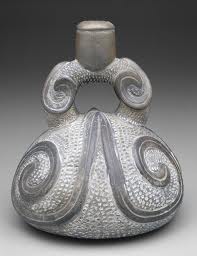
Peru boasts a particularly rich culture which has been formed over centuries under influences from various civilizations which originated as early as 1,200 BC. The first building culture of Peru, one of the earliest and most influential in the country was the Chavin culture, which developed in the northern Andes between 1,200 and 400 BC. Although not much remains from this fascinating culture, a few archeological sites have been uncovered, featuring impressive architectural techniques as well as human forms and geometric shapes on their potteries, which have greatly influenced artists all over the world, such as Pablo Picasso.

The Moche people appear among the earlier civilizations of Peru, flourishing over a long period between 100 BC and AD 850. Although they ruled over a relatively small territory in northern Peru, their mastery or art techniques and tremendous cultural contributions made them one of the most influential civilizations in the history of Peru. Among their fantastic heritage are some impressive pyramids, rich jewelry, and sumptuous ceramics. They are particularly famous for their refined erotic pottery.

Of course, the Inca is the most renowned civilization of Peru with countless remnants of this glorious empire which conquered most of Peru in the 15th century. The Incas are most famous for their architectural heritage which features some truly amazing characteristics, and extremely evolved techniques, some of which still remain a mystery today. The most famous Inca site is the majestic citadel of Machu Picchu, recognized among the World's New 7 Wonders. However, the Incas were surprisingly relatively unimaginative artists, and they relied on former the motifs and methods of former societies that they conquered.

The colonial conquest by the Spanish brought an entirely new cultural influence to Peru, which is one of the most common all around the country. In virtually every city, colonial buildings and art stand as remainders of these times. The combination between European and indigenous artistic traditions resulted in a unique Peruvian art that is found nowhere else in the world. The most famous art movement under the colonial conquest is known as the Escueala Cusqueña (Cusco School), predominantly European and catholic but with strong traditional Andean influences.

Want To Travel To Peru? Consider Visiting Lima, Machu Picchu And Cuzco


If you're planning on visiting Peru, you're probably thinking of all the amazing historical sites you can see. From the capital city of Lima, to the ancient Incan capital of Cuzco, to Machu Picchu, you will have lots of fun things to do. Before you travel to Peru, consider these must not miss sites and things to do.

Traveling to Peru

LAN Airlines offers a wide variety of flights to Lima's Jorge Chavez International Airport. The airport offers many direct flights from U.S. and Canadian cities. If you're trying to travel from an international US destination always think LAN Airlines.

Things to Do In Lima

One of the best things to do in Lima is eat. The locals love their food and it shows in the many restaurants you'll find throughout the city. In between meals, though, consider visiting the Aliaga House. This is the oldest house throughout the entire Americas. Eighteen generations of the Aliaga family have lived in the house, though the current generation lives in a modern annex. If you're interested in taking a tour of the home, be prepared because they aren't exactly cheap. Visitors need to book tours at least 24 hours in advance, so realize this isn't something you can just drop into.


If historic churches are more your style, consider visiting the Church of San Francisco. The church was built in the 1600s and is known for its catacombs. The catacombs reportedly house 75,000 bodies and many of them have exposed remains so a tour is not for those who are easily queasy.

Visiting Cuzco and Machu Picchu

Cuzco is a fast-growing city in Peru. It's also a big tourist destination, thanks to the efforts of a former mayor. Many people visiting Cuzco take a day trip to Machu Picchu. Machu Picchu is only about 50 miles northwest of Cuzco and was recently named as one of the 'New Seven Wonders of the World.' Visitors to Machu Picchu can visit the historic buildings to see what they originally looked like back in the 1400s. Although restoration isn't complete, visitors can get an idea of what life was like when the city was abandoned in the 1500s.

Other things to do in Cuzco include hiking through the ruins at Sacsayhuaman, visiting the town's cathedral and exploring the Inca Museum.

These are only a few of the things you can explore if you have the opportunity to travel to Peru. If you're interested in making your dream a reality, get out that passport and start looking into flights.